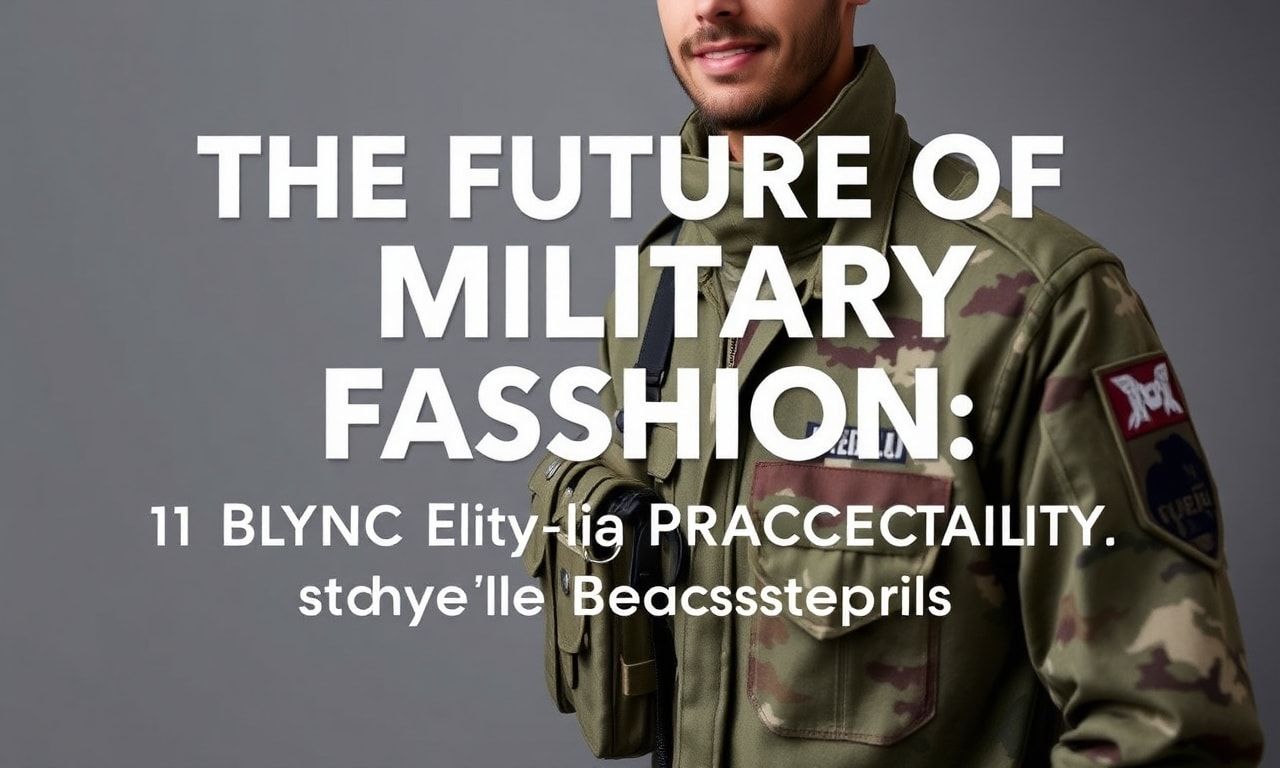
The Evolution of Military Attire
The military has always been at the forefront of technological and functional advancements, and this extends to their attire. From the heavy, cumbersome uniforms of the past to the lightweight, high-performance gear of today, military fashion has evolved significantly. This evolution is not just about aesthetics but also about enhancing the functionality and comfort of the soldiers. As we look towards the future, the trends in military fashion are set to become even more innovative and sophisticated.
Innovations in Military Fabric Technology
One of the most significant advancements in military fashion is the development of new fabric technologies. These fabrics are designed to be lightweight, durable, and capable of withstanding extreme conditions. For instance, fabrics that can regulate temperature, repel water, and provide protection against chemical and biological agents are becoming increasingly common. These innovations are not only improving the performance of military personnel but also their comfort and safety.
In addition to functional advancements, there is a growing emphasis on sustainability in military fashion. The use of eco-friendly materials and sustainable manufacturing processes is becoming a priority. This shift is driven by the need to reduce the environmental impact of military operations and to align with global sustainability goals. The integration of sustainable practices into military fashion is a testament to the industry’s commitment to innovation and responsibility.
The Role of Technology in Military Fashion
Technology plays a crucial role in the future of military fashion. The integration of smart fabrics and wearable technology is revolutionizing the way military personnel operate. These technologies can monitor vital signs, provide real-time data, and even offer protective features such as bulletproof vests with embedded sensors. The use of augmented reality (AR) and virtual reality (VR) in training and simulation is also enhancing the effectiveness of military operations. These advancements are not only improving the capabilities of military personnel but also their overall experience.
Moreover, the use of 3D printing technology is transforming the production of military gear. This technology allows for the creation of customized, high-performance equipment that can be tailored to the specific needs of individual soldiers. The ability to produce gear on-demand reduces the need for large inventories and ensures that military personnel have access to the latest and most effective equipment. This innovation is a game-changer in the field of military fashion and is set to have a significant impact on the industry.
The Influence of Civilian Fashion on Military Attire
The influence of civilian fashion on military attire is becoming increasingly apparent. The adoption of trends such as athleisure and streetwear is making military fashion more versatile and stylish. This trend is driven by the desire to create a more modern and approachable image for the military. The integration of civilian fashion elements into military attire is not only enhancing the aesthetics but also the functionality and comfort of the gear.
For those interested in the latest fashion trends, exploring platforms like 2026 modası giyim önerileri can provide valuable insights into the future of fashion. These trends are not only influencing civilian fashion but also shaping the future of military attire. The exchange of ideas and styles between these two worlds is creating a unique and innovative fashion landscape.
The Future of Military Fashion: Predictions and Trends
Looking ahead, the future of military fashion is set to be shaped by several key trends. The continued development of smart fabrics and wearable technology will enhance the capabilities of military personnel. The integration of sustainable practices will ensure that military fashion remains environmentally responsible. The influence of civilian fashion will make military attire more versatile and stylish.
Additionally, the use of advanced materials such as graphene and carbon fiber will improve the durability and performance of military gear. The adoption of modular designs will allow for greater customization and adaptability. The use of AI and machine learning in the design and production of military fashion will further enhance its effectiveness and efficiency.
Conclusion
The future of military fashion is bright and promising. The advancements in fabric technology, the integration of smart fabrics and wearable technology, the influence of civilian fashion, and the adoption of sustainable practices are all contributing to a more innovative and sophisticated military attire. These trends are not only improving the performance and comfort of military personnel but also their overall experience. As we look towards the future, the trends in military fashion are set to become even more exciting and groundbreaking.